


Between client pitches, team meetings across three time zones, media briefings, and recording The Spin Chicks with my co-host Erika Hirschfield a couple times a month, I’ve been on more video calls than I can count. And I’ve learned more from the bad ones than the good ones. The face lit like a hostage video. The audio that cut out right when the audience was leaning in. The screen share that opened to family photos. I’ve seen it all from every seat: as the presenter, as the interviewer, and as the audience member trying to stay polite.
So when I came across a Forbes piece by Dana Brownlee on the four home office items you need to present virtually, I found myself nodding through the whole thing. She’s right. After years of Zoom calls and webinars, I can tell you people decide in about three seconds whether they’re going to keep paying attention. Your setup makes that decision for you before you say a word.
Here’s the short list, plus one I’d add as a bonus.
1. Get an external webcam
The camera built into your laptop is doing its best. But an external webcam is a noticeable improvement, and it lets you put the camera where it belongs. That place is at eye level with your eyes sitting about a third of the way down the frame. I’ve watched people spend money on tripods and mounts when a stack of books under the laptop does the exact same thing. Try not to overthink it.
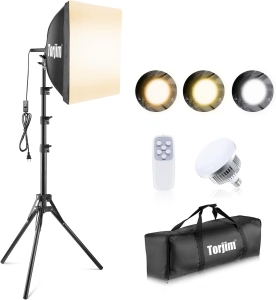
2. Fix your lighting now, not the morning of

3. Please, an external microphone
If I could only fix one thing on most people’s setups, it would be sound. This is the one the podcast really drove home for me. We’ve had incredible guests with incredible stories, and the episodes that are hardest to edit are never the ones with a boring answer. They’re the ones where someone was talking into a laptop from across the room. Bad video is forgivable. Bad audio is not. A simple USB mic on your desk makes a huge difference if you sit. Even better, read my blog on podcast mics: we use the Yeti mic. It’s worth the money.
4. Clean up what’s behind you
This one is free. A plain wall, a bookshelf, a corner that says something about you without stealing the scene. Virtual backgrounds are fine in a pinch, but they can chew up bandwidth and never look quite right. Whatever you land on, record a 30-second test and watch it back like a critic. Then silence the doorbell camera, the phone, the desktop notifications, and smile big. Your background should stay exactly that.
5. Test it all before you log on
I’ve sat through webinars where the presentation wouldn’t open and the presenter had no backup. Why? Because they hadn’t planned for the first one not to work. Don’t be that person. Is your presentation ready? Will it open on the first page? Are all your windows closed so you don’t show family pictures from your last vacation when you share your screen?
The thing nobody wants to hear
The best advice in her piece has nothing to do with buying anything. Record yourself with what you already own, watch it honestly, and only spend money on what’s actually broken. You don’t need the mic everyone on LinkedIn is using. You need one that works, so when it’s time to present you’re thinking about your message instead of fiddling with settings.
Get the setup right, get it out of the way, and let the story do the work.
If you want a second set of eyes on how you show up on camera, including your public speaking skills, I’m happy to take a look. Contact me and we’ll set up a call.